
USAC Draws on Regional and Global Expertise to Strengthen Kenya’s Universal Service Fund
The Universal Service Advisory Council (USAC) has gathered fresh insights to strengthen the governance, planning and impact of the Universal Service Fund (USF) through two concurrent engagements held from 26th to 29th October 2026 in the United States and Rwanda.
In Seattle, Hon. James Ongwae the USAC Chairperson and Eng. Fred Ongaro Deputy Director, Project Management attended the Fabric Forward 2026 Conference, organised by CostQuest Associates. The conference focused on the use of location-based data in broadband infrastructure mapping, network planning and investment decisions, including identifying serviceable locations, analysing coverage, tracking deployment and mapping funding commitments to pinpoint connectivity gaps and avoid duplicated investment.
Key sessions on broadband deployment economics examined the cost of building and operating networks, technology choices and the balance between investment and expected returns. These approaches are expected to enhance the USF’s assessment of connectivity gaps, its choice of suitable technologies and its estimates of the subsidies required in commercially unviable areas, supporting more accurate budgeting, procurement planning and value-for-money assessments.
The conference also addressed network performance verification, standardised reporting, compliance, permitting and service sustainability, all of which bear on how the USF monitors projects, works with implementing partners and verifies service delivery against contracts.
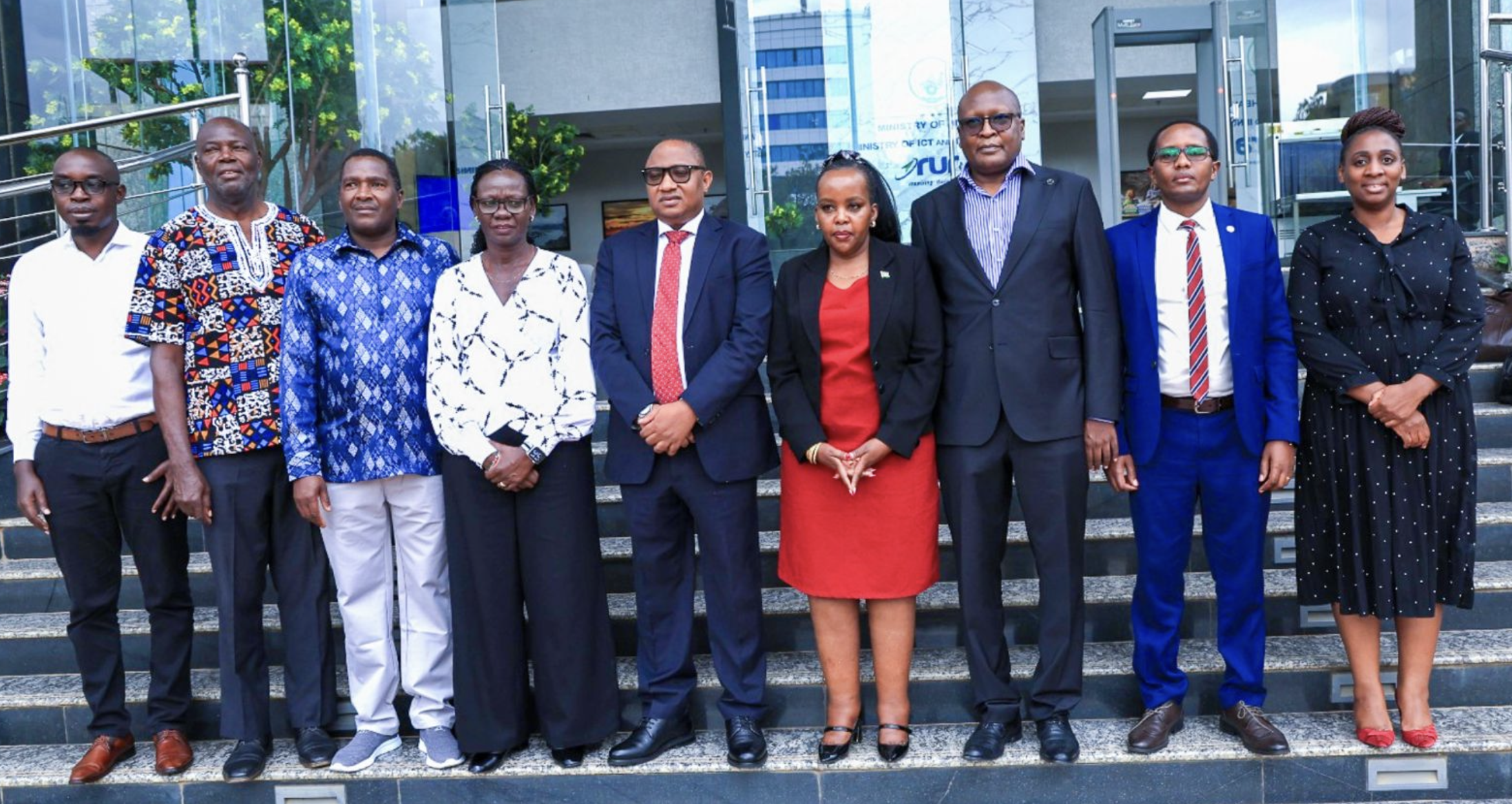
Meanwhile, in Kigali, Rwanda, a USAC delegation held discussions with the Rwanda Utilities Regulatory Authority (RURA), the East African Communications Organisation (EACO) and the Smart Africa Secretariat. Through technical sessions and institutional visits, the Council examined how USF projects are planned, implemented, monitored and sustained, with a focus on fund governance, resource utilisation, impact assessment and innovative interventions to promote meaningful digital inclusion.
At RURA, the delegation learned that Rwanda’s Universal Access Fund sits within the Corporate Services Division, where dedicated teams handle planning, impact assessment, and monitoring and evaluation, while projects are implemented through the ICT Department. The Rwandan model builds in accountability from the outset: a project must obtain an impact assessment certificate before it qualifies for funding, and supported interventions are subject to monitoring, audits and parliamentary scrutiny. The Fund provides grants and subsidies, while operators and other beneficiaries carry out implementation.
With ICT infrastructure coverage at approximately 98.2%, Rwanda has shifted its priorities towards service quality, affordability, meaningful usage and digital transformation, although device affordability, difficult terrain and quality of service remain challenges.
Two Rwandan practices stood out as relevant to Kenya. The first is integrated infrastructure planning, which builds passive telecommunications infrastructure into building designs so that operators can install active equipment more efficiently. The second is an operational expenditure support model, under which the Fund covers the operating costs of connectivity projects for two to three years before handing responsibility to operators.
The Smart Africa Secretariat emphasised that USFs across Africa must evolve beyond infrastructure expansion to close usage gaps, through investment in device affordability, digital literacy, skills, local content, digital entrepreneurship and artificial intelligence awareness.
The Secretariat further proposed stronger collaboration among African USF administrators, highlighted capacity-building opportunities through the Smart Africa Digital Academy (SADA) and identified internet traffic localisation as an emerging priority for lowering connectivity costs and strengthening digital sovereignty. In this regard, it pointed to Kenya’s strategic potential in regional traffic exchange.
For its part, EACO underscored the value of regional coordination, urging Member States to develop common positions on key ICT matters to strengthen the region’s collective voice at international platforms, especially the International Telecommunication Union (ITU).
The Kigali delegation comprised USAC members Dr. Amos Omolo, Dr. Ferdinand Nyongesa, Ms. Lily Koech, Ms. Frida Mutuma, Mr. Francis Parsimei and Mrs. Elizabeth Limagur and Mr. Michael Githiga, the Deputy Director, Fund Strategy Coordination. Others in the delegation included Mr. Mark Okuttah, Ms. Brenda Gabantu and Ms. Jefferson Akunga.
The two USAC engagements yielded valuable lessons for the USF, including the need to strengthen governance and accountability, broaden financing and adopt evidence-based project selection. They also underscored the importance of developing more accurate cost and subsidy estimates, promoting infrastructure sharing, improving the monitoring of service delivery, and investing in digital skills and meaningful connectivity.
The engagements reinforced the evolving role of Universal Service Funds as instruments of broader digital transformation rather than infrastructure deployment alone.